December 8, 2025
Charities: Get Ready For Soft Opt-In Email Marketing in 2026
You'll soon be able to stay in touch with more donors by email, but you need to prepare

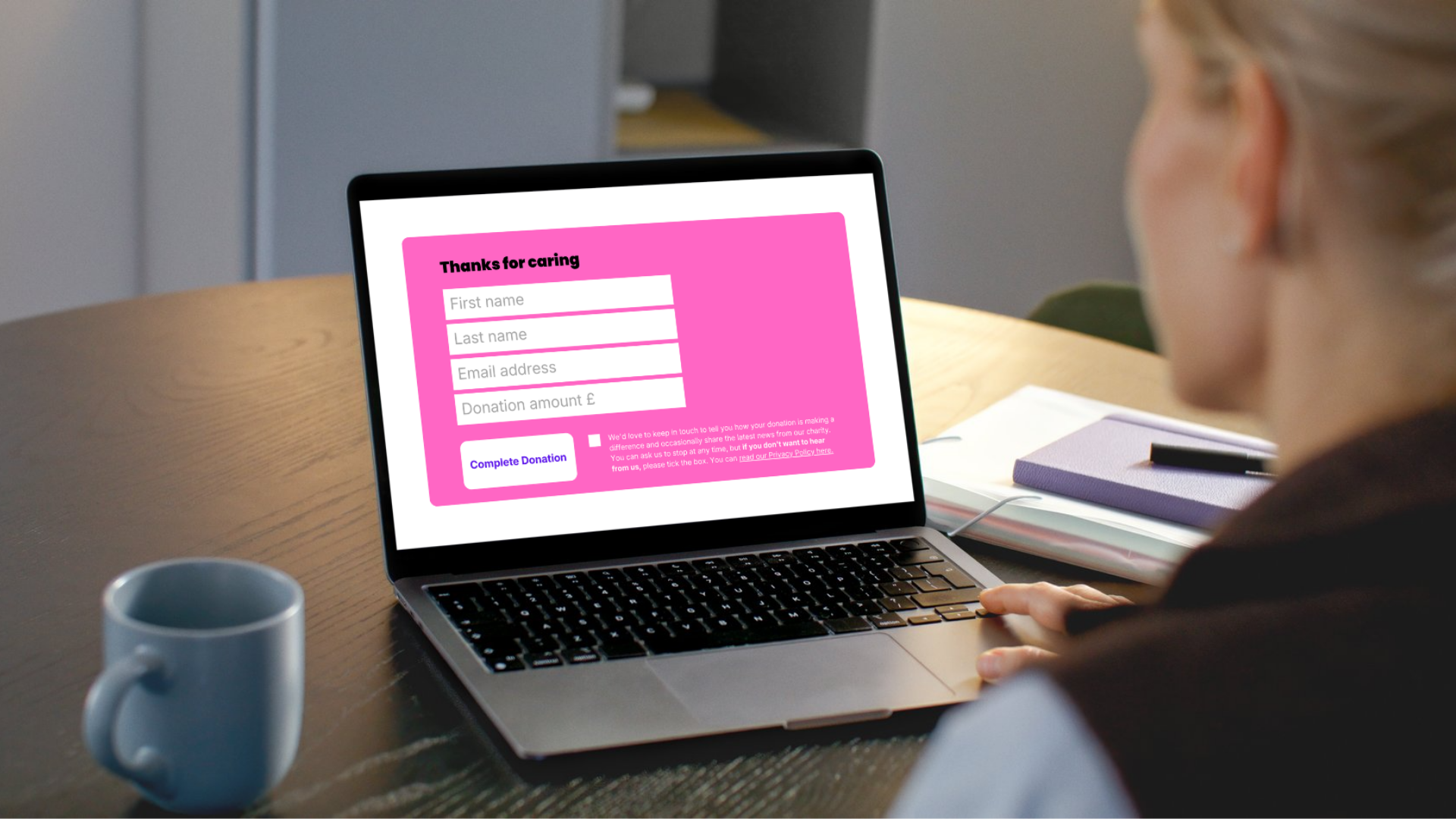
Changes introduced by the Date (Use and Access) Act or DUAA are due to come into effect from January 2026, and, for the first time, will give charities the ability to stay in touch with donors by email without first obtaining explicit consent.
The Privacy and Electronic Communications Regulations (PECR) originally came into force on 11 December 2003.
Regulation 22 allowed for the use of 'Soft Opt-In' but used very specific commercial language. It stated that you could only market to someone without explicit consent if you obtained their details "in the course of the sale or negotiations for the sale of a product or service".
But because a donation is legally a gift and not a sale, charities did not fit this definition. As a result, while retailers and other businesses could immediately use Soft Opt-In, charities were technically required to get consent from day one.
For many years, this distinction was something of a grey area that wasn't aggressively enforced. However, when GDPR came into force in 2018, it redefined what 'Consent' meant.
Beforehand, consent could be passive or implied (e.g., pre-ticked boxes were common) whereas GDPR required it to be "unambiguous and affirmative" (i.e., the user must actively tick the box).
The oversight caused by the narrow wording of Regulation 22, worsened by GDPR, has piled extra costs onto charitable fundraising.
The requirement to obtain explicit consent to marketing emails has impacted the cost of charitable fundraising in two main ways:
The tangible P&L cost. Being unable to email 60-80% of new donors forces charities to rely on direct mail postage services to stay in touch, which has become increasingly expensive. Putting aside fulfilment costs (design, printing, and envelopes), the cost of sending standard letter items by even second class post has risen from £0.30 in 2009/2020 to £0.87 today. Imagine you have a donor database of 15,000 but only 40% (6,000) have consented to receiving emails, that means that to reach the remaining 9,000 donors would cost £7,830 in postage alone just to send a single addressed mailing to each of them. It can be thought of as a 'stewardship tax' of at least £870 per thousand donors.
The opportunity costs (of silence). Given that the costs of postage are so high, it's too costly to stay in regular touch with donors, leading to lengthy 'fallow' periods where they receive no contact. By the time your next big appeal comes around, which could be many months later, they've forgotten who you are; they are essentially 'cold' the next time you ask them for support. Digital journeys allow for high-frequency, low-friction asks (e.g., "Click here to donate £5") and other regular contact that builds brand and cause affinity. Postal asks have high friction (find a chequebook/scan a QR code) and occur too infrequently.
Change is long overdue, but now imminent.
Starting from January 2026, charities will be able to take advantage of Soft Opt-In, making it easier and less expensive to stay in regular contact with donors and supporters.
The Information Commissioner's Office (ICO) which polices data privacy rules in the UK recently consulted on the changes and guidance requirements, ahead of implementation.
We still need to see the specific details, but it's likely that the requirements will be similar to five that apply to businesses, and so we anticipate that to comply, you'll need to be able to demonstrate that:
In practice, this means that:
To start getting ready, there are some specific actions that it would be sensible to start considering, and some important things to keep in mind*.

Update Donation Forms
Consider how you might change your email consent preferences on donate forms to something like:
We'd love to keep in touch to tell you how your donation is making a difference and occasionally share the latest news from [Your Charity]. You can ask us to stop at any time, but if you don't want to hear from us, please tick the box. You can read our Privacy Policy here.
Purpose: change the emphasis from explicit consent to Soft Opt-in, and explain it to people when you first collect their contact details, whilst also giving them the ability to decline emails at the point of making a donation.
Update Your Privacy Policy
Explain how soft opt-in works, the legal basis for it, how you will (and won't) use people's contact information, and how they can unsubscribe from further emails should they choose to.
Purpose: even though you are not seeking explicit informed consent, you should still inform people about how you with their contact details.
Divide Your List
Use a tagging system in your donation/CRM platform to distinguish between:
• People who have consented to marketing emails
• People who have joined your list by Soft Opt-in
Purpose: This will enable you to check how someone ended up in your list if you're ever challenged in the future, and also allow you to remind people about how and why you're emailing them.
Explain Why People Are Receiving Marketing Emails Every Time You Send One and Provide An Easy Unsubscribe Facility
In every marketing email you send, explain in the footer why your donors are receiving it. This is another reason for splitting your list.
For those who have provided explicit consent, you could use something like:
You are receiving this email because you gave us your consent to stay in touch with electronic communications when you made a donation, or registered for one of our fundraising events. You can unsubscribe or update your preferences here at any time.
For those who joined by Soft Opt-In:
You are receiving this email because you previously made a donation, or registered for one our fundraising events, and did not opt-out of electronic communications at that time. We are using your contact details to share information with you about other fundraising opportunities and news that we believe may be of interest to you. You can unsubscribe or update your preferences here at any time.
Under PECR, someone gives consent “for the time being” and can withdraw it at any time and this applies to Soft Opt-In. To comply with the requirement to give donors the ability to stop receiving your emails, make sure they each contain a simple unsubscribe function.
Purpose: You are making it clear how and why someone might be in your list every time you contact them, so there is no ambiguity, and giving them ample opportunity to withdraw their consent if they wish to.
Mirror These Changes In Email Marketing Software
It's common to link donation/CRM platforms with popular email marketing softwares like Mailchimp, Brevo, and Constant Contact in order to produce and send marketing emails.
If you do this, make sure that the changes to make in your donation/CRM platform are also observed in your email marketing platform too.
Ideally, this will be an automated process, but if that's not possible, you'll need to upload CSV files into two different audiences.
Train Staff On The Changes
It's a good idea to make sure your own people understand the changes, and can respond with confidence to any queries or complaints that you might receive from those who begin to receive electronic communications on the basis of Soft Opt-in.
Don't Email Anyone On Your List Who Hasn't Previously Consented To Receiving Electronic Communications
It's tempting to think that you'll be able begin sending emails to everyone already in your database - beyond just those who have previously given explicit consent - once Soft Opt-in takes effect. However, this would be a mistake, because even when taking advantage of Soft Opt-in rules, you must still offer an opt-out at the time you first collect people's contact details.
*This is not intended to constitute legal advice.
Changes brought about by the Data (Use and Access) Act will shortly allow charities to take advantage of what's known as the 'Soft Opt-In' provision detailed in Regulation 22 of the PECR.
This regulatory change means that your charity will be better able to stay in touch with more new donors by email, even if they don't explicitly consent to receiving electronic communications.
To comply, you must give new donors the ability to opt-out of receiving emails at the point at which you first collect their contact details (such as on an online donation form), and in all subsequent marketing emails.
The rule change is not retroactive, and so you cannot and must not start sending fundraising and marketing emails to past donors who haven't already given you permission.
Currently, charities lose 60-80% of potential contacts at the point of donation because they don't proactively tick 'Yes' to receiving fundraising and marketing emails. By moving to Soft Opt-In, charities can expect to capture this audience. While retail benchmarks suggest unsubscribe rates may rise slightly (to ~0.3% per email), the sheer increase in list size and reachable donors (projected to add £250m+ to the sector) vastly outweighs the minimal rise in opt-outs.
Enjoyed reading this, learned something new? Then help bring it to wider attention by sharing it on your socials for us! If you want practical help on implementing Soft Opt-In, or training for you and your team, get in touch via our Contact Page.
Our latest news and trending topics